Who gets in, judged by where they are. Two lists and a switch.
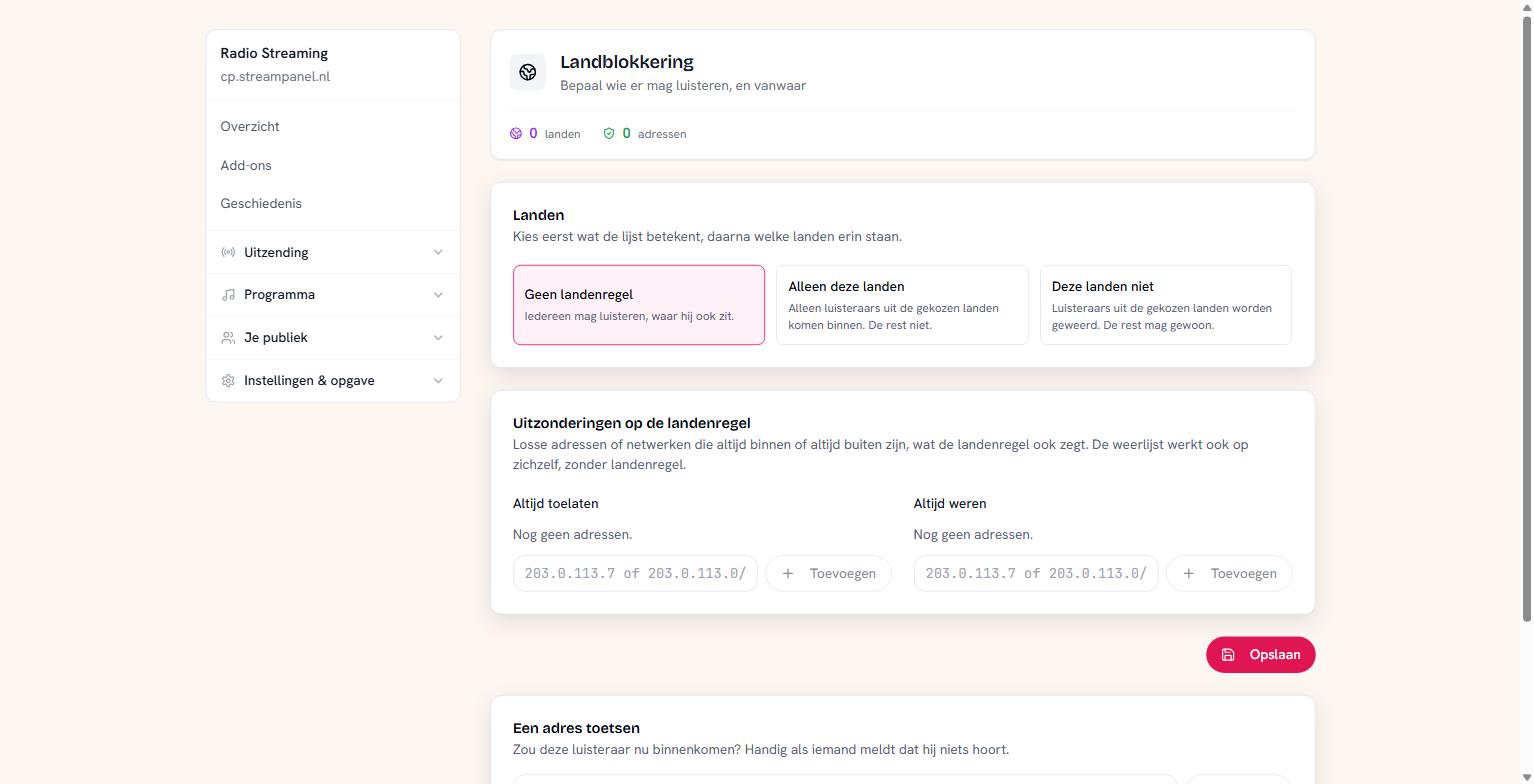 The geo-blocking screen with the three modes and the exceptions
This is part of the larger plans.
The switch says what the list means
This is the part people get wrong, so precisely. The same country list means something entirely different per mode:
Geen landenregel — everyone may listen, wherever they are.
Alleen deze landen — only listeners from the chosen countries get in. The rest don't. Choose the Netherlands here and nobody outside the Netherlands hears you any more.
Deze landen niet — listeners from the chosen countries are refused. The rest are fine.
So first choose what the list means, and only then which countries are in it.
Why you'd want this
Usually it's about rights or about cost. A sports report may sometimes only be broadcast within one country. And if your bandwidth is going to listeners on a continent where you have no business, this is the brake.
Look at Statistieken first to see where your audience actually is, before you close anything off.
Individual addresses always win
The exception lists sit on top of the country rule and always win:
Altijd toelaten — your own studio, your office, or a partner who'd otherwise be excluded.
Altijd weren — one nuisance.
The block list also works on its own, without you turning on a country rule. So you can shut out one address and leave everything else as it was.
You enter an address or a whole network in slash notation.
Testing an address
At the bottom you can enter an address and see whether that listener would get in right now. Handy when someone reports hearing nothing: you immediately know whether it's your rules or something else.
This test always works, even without the entitlement.
If you move to a smaller plan
Note: your country list is not wiped. Your station keeps refusing listeners according to the rule that was set, while you can no longer change it. That's why this screen stays readable — otherwise you'd be hunting a fault that isn't there.
If you want the blocking gone, switch it off before moving to a smaller plan.
Where the country data comes from
Determining the country for an address uses data from DB-IP. That attribution is on the screen and belongs there — it's a condition of their licence, not decoration.